December had moments of excitement with two unusual birds (unusual in that we rarely see them from the viewing window). This image is a hint… Read on!
Through the Window: December 2025


where natural history meets art
December had moments of excitement with two unusual birds (unusual in that we rarely see them from the viewing window). This image is a hint… Read on!
 The late fall November routine is all about ending the “summer” open season and preparing for the winter “behind the scenes” season. We often try to take lunch at the viewing window or share a moment with visitors there.
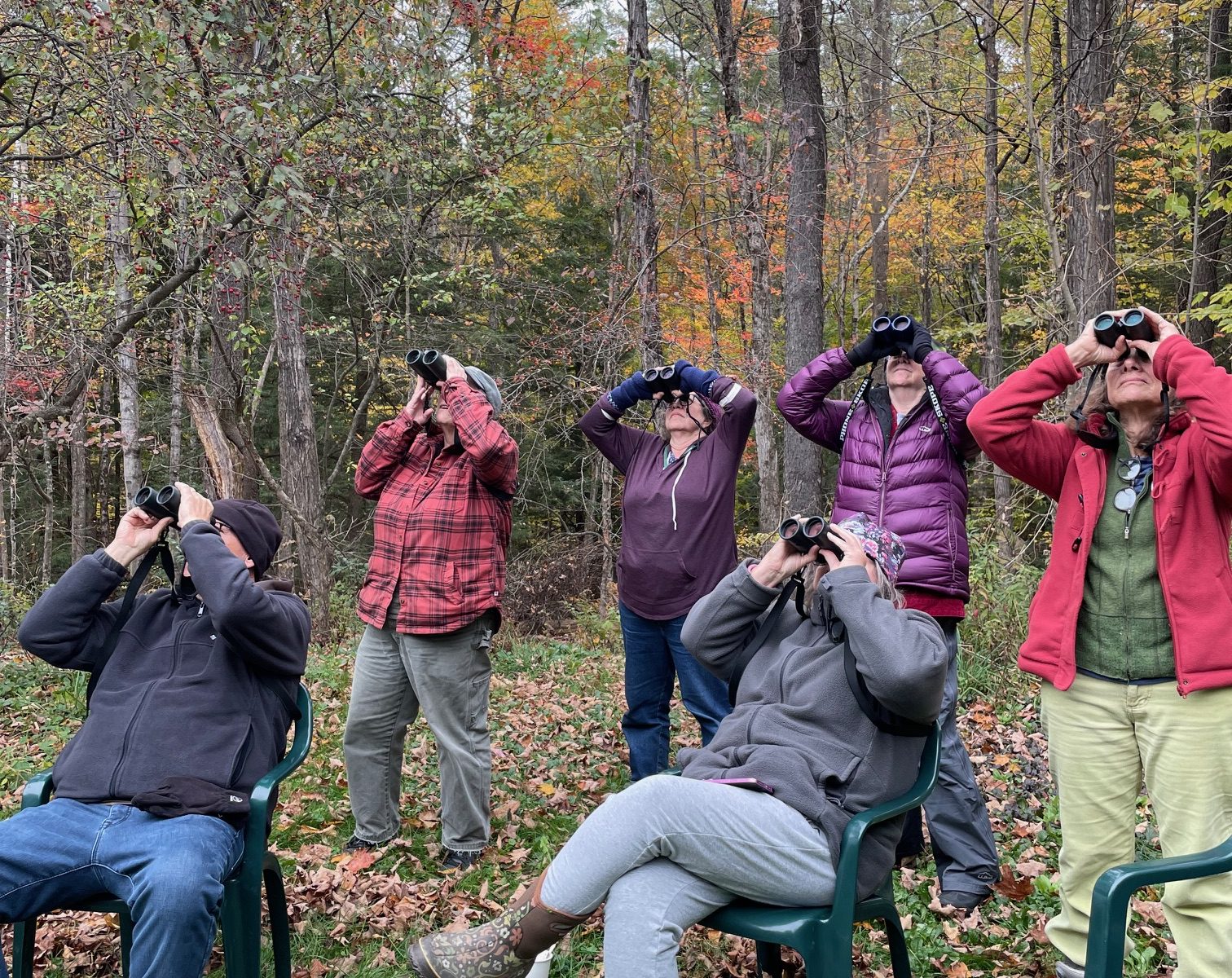
 October is always surprising, what with migration trailing off, interesting swings in weather, and the Big Sit.

Warm and dry pretty much the whole month. Pleasant for sitting around, and can make some nice updrafts. Did you go hawk watching?
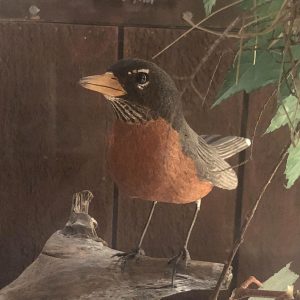
Every now and then this year, a warbler comes to the feeder—not to eat, apparently, just to check things out from that perch. And (presumably less often) we notice!
Oh my gosh, it’s been SO dry. Thankfully, we have a little trickle of water coming into a well-shaded tiny pond. The Bee balm and the willow and the goldenrod are a bit too tall and dense to see the birds taking their small drinks at the water, though! (The Hummingbirds sure like the bee balm!)
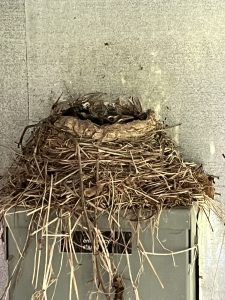
Goodness it’s been hot. What did you have out for birds in your backyard to beat the heat? We have multiple types of cover (shade and safety) and water as well. These robins used the roof of one our sheds as their shade.

We had some great Early Bird Walks this month—you can visit our checklists at eBird to see what we observed not from the window (link below).
By the end of the month, it felt like things are settling down : a robin is incubating or raising a second brood near our back door; adult cardinals are feeding young. Who next will bring their babies around? Chickadees? Blue Jays? Hummingbirds? Watch for fluttering wings and listen for unusual squeakings.
 Have you been on one of our Early Birder walks yet? Every Sunday in May and June!
Also, wow was it rainy this month. Good heavens.

As usual, we keep track of birds seen through the window with notes on a white board by the window (see the list below). We had a couple of less-usual species sighted this month, including both year-round residents (just not usually observed from the window) and migratory species.
Spring is surely happening!
