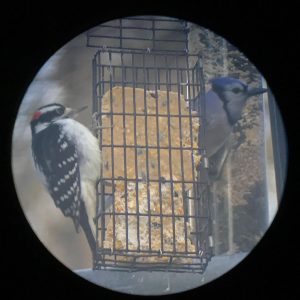
Digiscoping a Downy Woodpecker and Blue Jay sharing a suet feeder. Photo by E. Talmage, and used with permission.
Welcome to the first month of our by-appointment season! It’s sometimes extra quiet around here as we work to catch up on reports, projects, and prepare for our annual appeal.
And Feederwatch began! We have some volunteers who are wonderfully dedicated to helping the Museum participate in this community science program, so thank you Michele, Megan and Debbie!
October is glorious! We started the month with the Dead Creek Wildlife festival, continued birding during the Big Sit!, admired pollinators on fall flowers like asters, explored and documented plants for the phenology project, and welcomed campers visiting through the Harvest Host program. We spent some time working on the Retreat, which we hope to open to overnighters sometime in the next year.
Of course, we have to sit down by the Viewing Window and just watch birds to recover from all of this.
As the risk of avian flu declined, we looked at the information out from Vermont Fish & Wildlife and Cornell Lab of Ornithology. We had been using the hummingbird feeders (they’re so territorial!); then we put out just the cylinder feeder late this month. Right away some of our “usual suspects” were at it!
Solitary Sandpiper wood carving. Carved by Ingrid Riga Rhind in 2001.
Of note this month was our Community Day and a sighting of a sandpiper up at our pond. That’s not too uncommon, although it doesn’t always get noted on the Viewing Window list!
A nice month! We were busy with camp groups, some new Nestlings programs, our wonderful annual butterfly walk, a carving class, and the final touches on our July Chip Notes newsletter.
And with all that, we still time to do a little sedentary birding! Though we are a bit sparse on birds at the feeders right now (see below)…
Red-eyed Vireo from the Teaching Warblers collection. Carved by Bob Spear in 1988. Photographed by Erin Talmage.
It’s been a pleasant early summer month at the Birds of Vermont Museum. We’re continuing our Early Birder Morning Walks on Sundays, and had a new walk offered: “Tree IDs for Birders”. We even had a booksigning and a carving class!
Even though we’ve cut back on our feeding, we have still been able to enjoy spotting birds through our windows (and doors) at the Museum.
Still limiting feeding, although this month we saw so many birds that one might hardly have thought we were doing this! (Also, see below for why.)
We also noticed that at certain times of the day, the light hit the front door just right (or perhaps, just wrongly) to apparently encourage bird collisions. We have fixed this! (More on this below, too.)
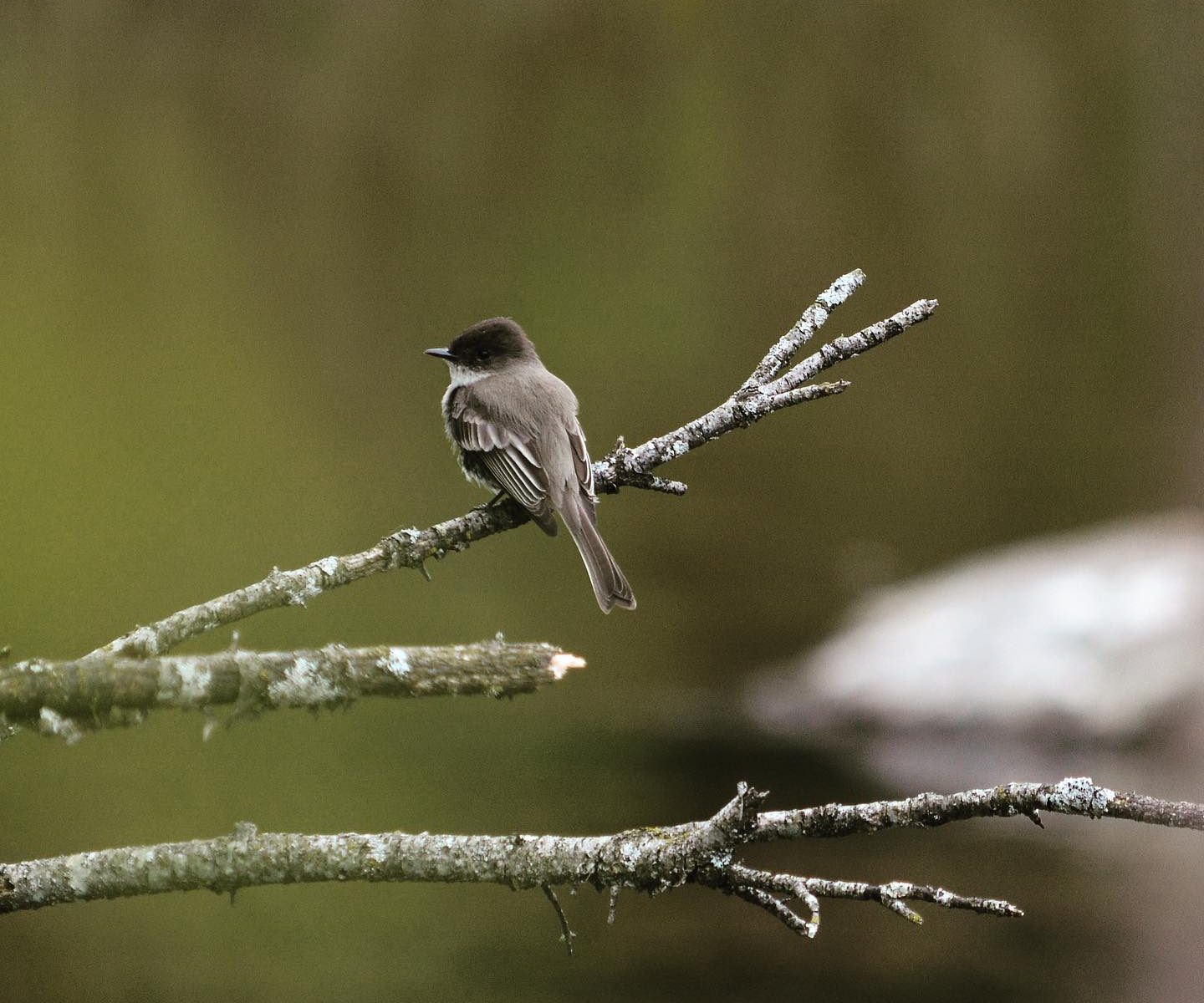
Eastern Phoebe. Photo by E. Talmage and used by permission.
Despite changing from regular feeding to a restricted type and amount (see below for why), we still enjoying observing birds through our window. Something about just sitting, watching, maybe taking notes or doing Feederwatch… this helped us get through a wicked bad mud season and a few April snowfalls.
And as we post this, we’re well into another migration season! Check out BirdCast for nighttime forecasts of what’s moving where.
March usually see us getting excited about what’s left to do before our drop-in season (May – October) and which migrants are passing by on their way further north (looking at you Fox Sparrow. Also mud. Sherman Hollow Road at the end of March this year was …. remarkable. Yet passable, unlike some other roads around the state. So we could keep feeding the birds.
By the way, Vermont Fish & Wildlife recommends taking in your bird feeders on April 1st, to avoid habituating bears to our spaces. Our feeders are 8′ off the ground on a steel pole set in concrete; it’s both bear resistant and not too much of a temptation. Bears learn quickly what’s out of reach and not worth the effort.

 As the risk of avian flu declined, we looked at the information out from Vermont Fish & Wildlife and Cornell Lab of Ornithology. We had been using the hummingbird feeders (they’re so territorial!); then we put out just the cylinder feeder late this month. Right away some of our “usual suspects” were at it!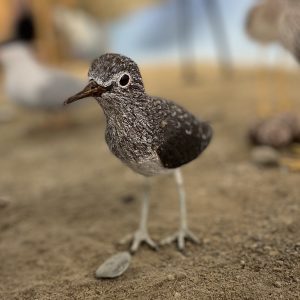
 A nice month! We were busy with camp groups, some new Nestlings programs, our wonderful annual butterfly walk, a carving class, and the final touches on our July Chip Notes newsletter.